


President
Yumin Sheng (Ph.D., Yale University) is an associate professor of political science at Wayne State University in Detroit, Michigan. His research interests are civil-military relations, patronage and clientelism, economic globalization and domestic politics, federalism and decentralization, regional political representation and resource redistribution under authoritarianism, with a focus on contemporary China. He is the author of Economic Openness and Territorial Politics in China (Cambridge University Press, 2010). His work has also appeared in the British Journal of Political Science, China Quarterly, Comparative Political Studies, Japanese Journal of Political Science, Journal of Contemporary China, Modern China, Studies in Comparative International Development, and World Development. He was a visiting research fellow at the East Asian Institute, the National University of Singapore in 2008.

President-Elect
Xiaojun Li (Ph.D., Stanford University) is an Associate Professor of Political Science at University of British Columbia. His research lies at the intersection of international relations and comparative politics. His recent books include Token Forces: How Tiny Troop Deployments became Ubiquitous in UN Peacekeeping (Cambridge University Press 2022), Fragmenting Globalization: The Politics of Preferential Trade Liberalization in China and the United States (University of Michigan Press 2021), and How China Sees the World: Insights from China’s International Relations Scholars (Palgrave 2019). He has published widely in general political science journals such as Journal of Politics and Political Science Research and Methods, international relations journals such as International Affairs and International Studies Quarterly, area studies journals such as China Quarterly, Journal of East Asian Studies, and Pacific Affairs, as well as interdisciplinary journals such as Business and Politics, Regulation and Governance, and Studies in Comparative International Development. He was a Princeton-Harvard China and the World Fellow at Harvard University’s Fairbank Center for Chinese Studies, a POSCO Visiting Scholar at the East-West Center in Honolulu, and an inaugural Wang Gungwu Fellow at the ISEAS–Yusof Ishak Institute in Singapore.

Treasurer
Xian Huang is an Associate Professor in the Department of Political Science at Rutgers University and is affiliated with the Rutgers Center for Chinese Studies. Her research interests include (1) political causes and consequences of social inequality, stratification, and (im)mobility; (2) redistribution, social welfare, and health policies; (3) public opinion and preferences under authoritarian rule. The regional focus of her research is China and East Asia. Xian Huang received a PhD of Political Science from Columbia University. She received BA degrees in Political Science and Economics, and a MA degree in Political Science from Peking University (Beijing, China). Before joining Rutgers, she was a postdoctoral fellow in the Center for the Study of Contemporary China at University of Pennsylvania.

Research Director
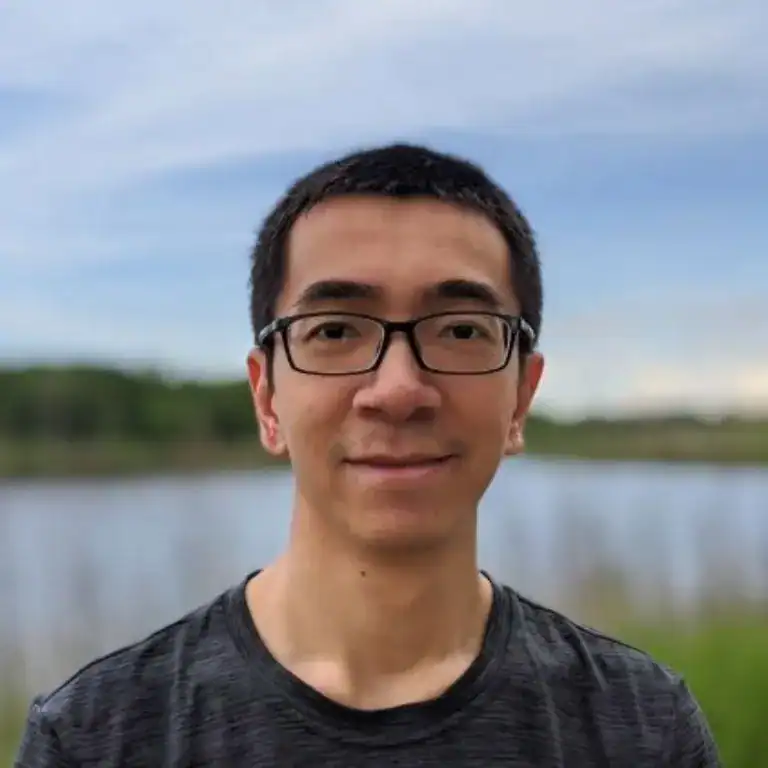
Adam Liu is a political scientist trained at Stanford University, though he doesn't believe in disciplinary and methodological boundaries. He studies Chinese politics and political economy. His dissertation, "Building Markets within Authoritarian Institutions: The Political Economy of Banking Development in China," won the 2020 BRICS Economic Research Award. The Award carries a prize money of Indian Rupees 1.5 million (approximately USD 21,000), supported by the Exim Bank of India, a citation and a medal. He currently teaches at Lee Kuan Yew School of Public Policy, National University of Singapore. He is the author of Authoritarian Markets: The Politics of China's Banking Explosion (Forthcoming 2026, Cornell University Press).
Membership Director
Zhihang Ruan is an Assistant Professor of Political Science at Hunter College, the City University of New York. He received his Ph.D. in political science from Northwestern University in the summer of 2023. His research interests include comparative political economy, international development, labor politics, and land institutions. His regional focus is on China and Vietnam, where he has conducted over 18 months of fieldwork before and during the COVID-19 pandemic. His work has been published in The China Quarterly. He has received awards from the Vietnam Studies Group of the Association of Asian Studies and was selected as a Southeast Asia Research Group (SEAREG) fellow.
Newsletter Director
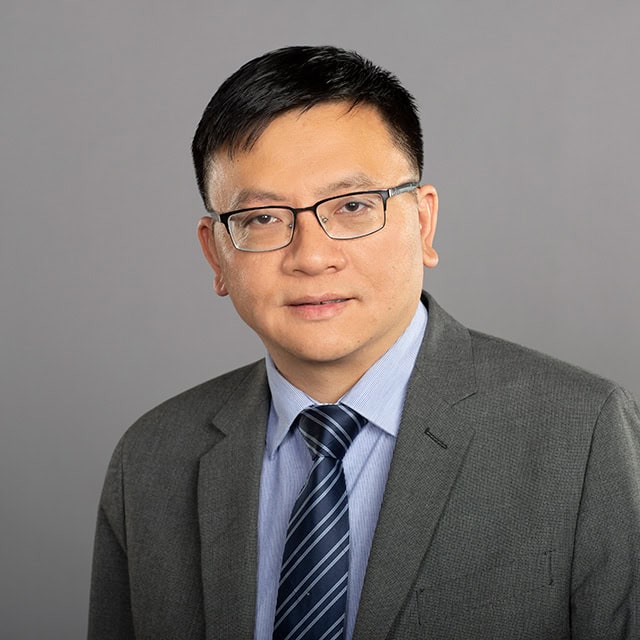
Xiaoyu Pu is an associate professor of political science at the University of Nevada, Reno. He is a member of the Public Intellectuals Program of the National Committee on United States-China Relations (NCUSCR). He has also received fellowships from the Inter-American Dialogue in Washington D.C., Fundação Getulio Vargas (FGV) in Brazil and the China and the World Program at Princeton University. He is the author of Rebranding China: Contested Status Signaling in the Changing Global Order (The Studies in Asian Security Series, Stanford University Press, 2019). His research has appeared in International Security, International Affairs, The China Quarterly, and The Chinese Journal of International Politics. He serves on the editorial boards of The Chinese Journal of International Politics (Oxford University Press) and Foreign Affairs Review (China).

Publicity Director
Dr. Xi Chen (Ph.D., Virginia Tech) is currently a fellow at the John G. Tower Center for Public Policy and International Affairs of the Southern Methodist University. She was an associate professor in the Department of Political Science at the University of Texas, Rio Grande Valley (UTRGV), specializing in International Politics with a focus on China. Dr. Chen obtained her Doctoral degree in Planning, Governance, and Globalization from Virginia Tech, M.A. in Applied Linguistics from China Foreign Affairs University, and B.A. in English from Shandong University. Her primary research and teaching interests include Chinese Foreign Policy, Asian Politics, Chinese Politics, Media and Politics, Global Security, and International Politics.